People
Leadership
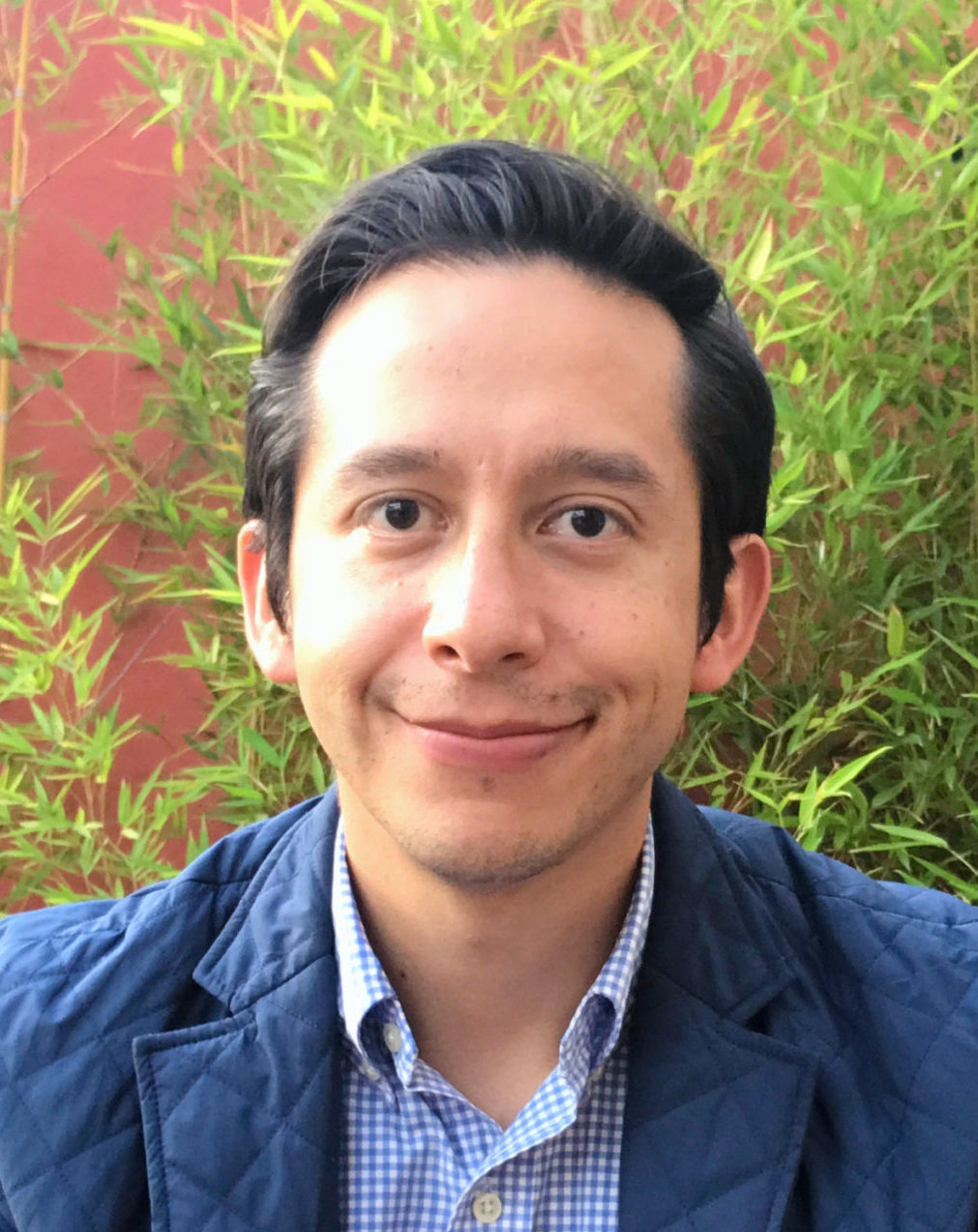
Edmundo Molina-Perez, President (Tecnológico de Monterrey)
Edmundo Molina-Perez is an associate research professor at the School of Government and Public Transformation of Tecnológico de Monterrey. His work focuses on the development of new computational methods for studying technological change, and the use of data science methods for decision analysis under conditions of deep uncertainty.
https://research.tec.mx/vivo-tec/display/PID_300603

Julie Rozenberg, Vice-President (World Resources Institute)
Julie Rozenberg is the Chief Economist at the World Resources Institute, where she leads efforts to support countries’ transitions through economic analysis and modeling, using data and dialogue to convene stakeholders, guide investment strategies, and align financial flows with people, nature, and climate goals. Before joining WRI, Julie held global and regional technical leadership roles at the World Bank, where she helped countries build more sustainable, resilient, and inclusive growth paths. She led pioneering work to scale up adaptation investments and authored major regional and global reports on infrastructure and climate action. Julie has published extensively in peer-reviewed journals and serves as an editor for WIREs Climate Change.
https://blogs.worldbank.org/team/julie-rozenberg

Raymond Obare, Education and Training Chair (Impact Investing Kenya)
Raymond Obare is a public policy and development professional with over a decade experience in assisting both public and private sectors to mainstream climate action, circular economy and impact investing. He has worked on circular economy projects Kenya, Zambia, Zimbabwe, and Malawi. Raymond has worked with Kenya Private Sector Alliance (KEPSA) on advocacy and influencing of several policies including but not limited National Sustainable Waste Management Act 2022, Extended Producer Responsibility Regulations 2024, and National Disaster Risk Management Bill 2024.
https://www.linkedin.com/in/raymond-obare-9a070631
 Michelle R. Miro, Career Development Chair (RAND)
Michelle R. Miro is an information scientist with a broad portfolio of work across climate resilience and adaptation and disaster recovery for critical infrastructure, with a focus on the water sector. She has methodological expertise in water resources modeling, climate data analysis, remote sensing, geospatial analysis, machine learning and decision making under deep uncertainty (DMDU). Miro is also a professor at the Pardee RAND Graduate School.
https://www.rand.org/about/people/m/miro_michelle_e.html
 Pedro Nascimento de Lima, Membership Chair (RAND)
Pedro Nascimento de Lima is an associate engineer at the RAND Corporation. His research leverages simulation modeling, high-performance computing, and Decision Making Under Deep Uncertainty methods to inform health policy decision-analytic problems. Prior to joining Pardee RAND, he was a lecturer at UNISINOS, where he taught simulation modeling and other quantitative courses.
https://www.rand.org/about/people/l/lima_pedro_nascimento_de.html
 Antonia Hadjimichael, Fundraising Chair (Penn State)
Antonia Hadjimichael is an Assistant Professor at the Pennsylvania State University, studying complex human-Earth systems. Her research sheds light on how human and Earth systems interact across scales and shape human impacts, specifically in the domain of water and planning under uncertainty. Her toolkit includes many-objective evolutionary optimization, machine learning, visual analytics and high-performance computing, among other methods. She holds a BSc in Mathematics from the University of Leicester, UK, a MSc in Environmental Modeling from University College London (UCL), UK, and a PhD in Water Science and Technology from the University of Girona, Spain. She also serves in the Facilitation Team for the MultiSector Dynamics Community of Practice, and in Penn State’s Water Council.
https://www.hadjimichael.info/
 Steven Popper, Rules and Processes Chair (Tecnológico de Monterrey)
Dr. Steven Popper is Distinguished University Professor of decision sciences at Tecnológico de Monterry. He is also professor of science & technology policy at the Pardee RAND Graduate School, where he teaches courses such as Complex Adaptive Systems and Policy Analysis; Participatory Foresight for Democratic Governance and Social Change; Technology Foresight and Policy Analysis; and Robust Decision Making. He is an adjunct senior economist at RAND Corporation in the United States, a nonprofit institution that develops innovative solutions to public policy challenges and decision-making problems. He is one of the developers of Robust Decision Making and other DMDU methods and co-editor of the handbook Decision Making under Deep Uncertainty: Theory and Applications (Springer).
https://tec.mx/en/our-faculty/ecsg/steven-popper
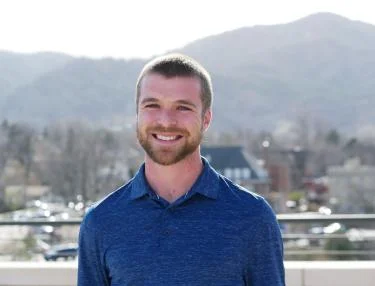 Nathan Bonham, Communications and Outreach Chair (Bureau of Reclamation)
Nathan Bonham is a civil engineer with the Bureau of Reclamation’s Lower Colorado Research and Modelling Team. In this role, he applies Decision Making Under Deep Uncertainty methods to support reservoir operations planning in the Colorado River Basin. Nathan earned his PhD in Civil Engineering, with a focus on hydrology and water resources, from the University of Colorado Boulder in 2023. His research developed statistical methods and interactive tools for evaluating the robustness of environmental management policies to climate and demand scenarios and for visualizing performance tradeoffs.
https://www.linkedin.com/in/nathan-bonham-74b2a022a/